Archive for the Books Category

“A Writer’s Credo”

Posted in Books, Journalism, Politics with tags , , , , , , , , on September 9, 2008 by macmystery

My friend Jennifer mailed me a book on Yellowstone Park by a man named Jack Turner a few weeks ago. I can only imagine spending serious time in Yellowstone. It’s one of those places most people only read about. You know it exists, you’ve seen it on PBS specials but you’ve never been.

Consequently, making it to the east side of Yosemite National Park was one of my goals for my six-week stay in Reno this summer for the Maynard Editing Program, where I met Jen.

Unfortunately, it didn’t happen. It was simply a casualty of circumstance. I did see Lake Tahoe twice, Virginia City twice, and I made it to San Francisco and the West Coast for the first time in my life. (Not to mention, despite not being gay, I’ve now been to two major Gay Pride parades. Bizarre.)

Jennifer, who lives in San Antonio, saw the book at a booksale, knew about my unfulfilled goal and bought the book for me. She sent it along with some Alamo crackers for Dylan.

I haven’t got around to reading it yet. I will as soon as I finish the book I’m reading about the South. But I have perused “Travels in the Greater Yellowstone” enough to find this nugget between the acknowledgements and the introduction:

“The moral duty of the free writer is to begin his work at home: to be a critic of his own community, his own country, his own government, his own culture. The more freedom the writer possesses the greater the moral obligation to play the role of critic.”

The words were not written by Turner, but by Edward Abbey, “an American author and essayist noted for his advocacy of environmental issues and criticism of public land policies,” to quote Wikipedia, which of course, is always dangerous.

Apparently, Abbey, who died in 1989, was quite a controversial character. He was quite the environmentalist, with most of his attention focused on the American West, yet he refused to be associated with those we commonly know as environmentalists and tended to anger those on both the right and the left. For example, he advocated burning draft cards as early as 1947, but was known to support the National Rifle Association.

Abbey’s politics aside, his “Writer’s Credo,” originally written as a lecture and included as a chapter in his book “One Life At a Time, Please,”  is as on the money as one could be. And though Abbey was an author and not a journalist, at least in the common sense, he hits on what some of the goals of a journalist should be.

In the process of finding out more about Abbey, including spending considerable time on a Web site dedicated to his works and fans, per se, I came across a treasure trove of interesting quotes by the man. Here are a few: 

To truly bring about change, one must be willing “to oppose injustice, to defy the powerful, to speak for the voiceless.”

“Truth is always the enemy of power. And power the enemy of truth.”

“Whenever I see a photograph of some sportsman grinning over his kill, I am always impressed by the striking moral and aesthetic superiority of the dead animal to the live one.”

“Better a cruel truth than a comfortable delusion.”

“A knowledge of the true age of the earth and of the fossil record makes it impossible for any balanced intellect to believe in the literal truth of every part of the Bible in the way that fundamentalists do. And if some of the Bible is manifestly wrong, why should any of the rest of it be accepted automatically?”

“The tragedy of modern war is that the young men die fighting each other – instead of their real enemies back home in the capitals.”

“Society is like a stew. If you don’t stir it up every once in a while then a layer of scum floats to the top.”

“There is no force more potent in the modern world than stupidity fueled by greed.”

“In art as in a boat, a bullet, or a coconut-cream pie, purpose determines form.”

“Grand opera is a form of musical entertainment for people who hate music.”

“Science is the whore of industry and the handmaiden of war.”

“The rich can buy everything but health, virtue, friendship, wit, good looks, love, pride, intelligence, grace, and, if you need it, happiness.”

“The feminist notion that the whole of human history has been nothing but a vast intricate conspiracy by men to enslave their wives, mothers, daughters, and sisters presents us with an intellectual neurosis for which we do not yet have a name.”

“There’s nothing so obscene and depressing as an American Christmas.”

“Motherhood is an essential, difficult, and full-time job. Women who do not wish to be mothers should not have babies.”

“The best American writers have come from the hinterlands–Mark Twain, Theodore Dreiser, Jack London, Hemingway, Faulkner, Wolfe, Steinbeck. Most of them never even went to college.”

“Abolition of a woman’s right to abortion, when and if she wants it, amounts to compulsory maternity: a form of rape by the State.”

“In the Soviet Union, government controls industry. In the United States, industry controls government. That is the principal structural difference between the two great oligarchies of our time.”

America My Country: last nation on earth to abolish human slavery; first of all nations to drop the nuclear bomb on our fellow human beings.”

Any hack can safely rail away at foreign powers beyond the sea; but a good writer is a critic of the society he lives in.”

“There never was a good war or a bad revolution.”

“Baseball serves as a good model for democracy in action: Every player is equally important and each has a chance to be a hero.”

“The most common form of terrorism in the U.S.A. is that carried on by bulldozers and chain saws.”

“A patriot must always be ready to defend his country against his government.”

“Jane Austen: Getting into her books is like getting in bed with a cadaver. Something vital is lacking; namely, life.”

And last, but not least:

Life is too short for grief. Or regret. Or bullshit.”
Farewell, Skip and Alex

Posted in Books, Sports with tags , , on August 6, 2008 by macmystery
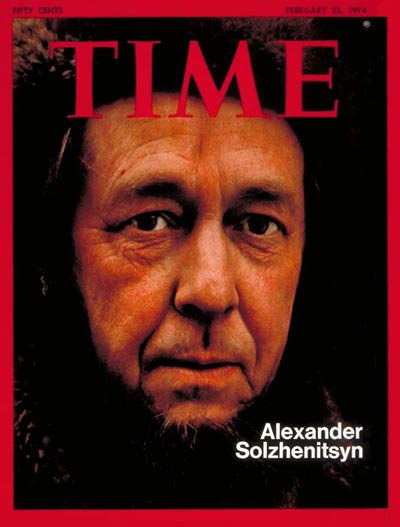
Alexander Solzhenitsyn

Alexander Solzhenitsyn

Over the weekend, which I spent at a campground with no real source of information, two public figures died that I wanted to say something about. They are definitely strange bedfellows, sharing a post like this.

On Sunday, Russian writer Alexander Solzhenitsyn died at the age of 89. I read his book “A Day in the Life of Ivan Denisovich” early in my high school career. Only later did I grasp the meaning of the work.

Solzhenitsyn defied the Soviets and was expelled from his homeland as a result. He wrote what needed to be written at a time and in a place where it could have meant he’d disappear and never be seen again.

Skip Caray, Ernie Johnson and Pete Van Wieren

The Braves announcing team in 1977: Skip Caray, Ernie Johnson and Pete Van Wieren

Unlike Solzhenitsyn, Skip Caray wasn’t out to make any political statement. But he meant a great deal to me.

I grew up loving the Atlanta Braves and listening to them on the radio every night when I had to go to bed before the game was over. I was listening in the dark in the late 1970s and early 1980s, just like boys … and my mother, the baseball fan among my parents … had in the 50s and 60s.

The trio of Ernie Johnson, Pete Van Wieren and Skip painted the picture for me. And I’ll never forget it.

A lot of obits and stories about Skip this week point out that he was the son of famous announcer Harry Caray, voice of the Cardinals and Cubs. But I’d been listening to Skip for 6 or 7 years as a kid before I even knew that. As far as I’m concerned, Harry may as well have been father of famous announcer Skip Caray.

Here are what some other folks had to say about Caray:

The Hilton Head Island packet’s David Lauderdale

The Tifton Gazette’s Steve Carter

The AJC’s Furman Bisher

MLB.com’s Mark Bowman

More Harry Potter? … well, kinda

Posted in Books with tags on August 6, 2008 by macmystery

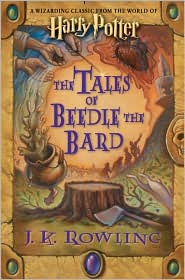
"The Tales of Beedle the Bard"

I got an e-mail from Barnes & Noble today letting me know that the new J.K Rowling book was available for pre-order. Obviously, I was interested in what the Harry Potter author had coming out next, and to my surprise it was a Harry Potter-related book.

“The Tales of Beedle the Bard” will e released on Dec. 4 … just in time for Christmas, no less.

It contains all five wizarding tales left to Hermoine Granger by Professor Dumbledore in the seventh and final book in the series, “Harry Potter and the Deathly Hallows.” Only one of these tales, “The Tale of the Three Brothers,” was recounted in the book. The rest are revealed in this 128-page book that lists for $12.99.

Here’s the synopsis from the Barnes & Noble Web site:

The Tales of Beedle the Bard, a Wizarding classic, first came to Muggle readers’ attention in the book known as Harry Potter and the Deathly Hallows. Now, thanks to Hermione Granger’s new translation from the ancient runes, we present this stunning edition with an introduction, notes, and illustrations by J. K. Rowling, and extensive commentary by Albus Dumbledore. Never before have Muggles been privy to these richly imaginative tales: “The Wizard and the Hopping Pot,” “The Fountain of Fair Fortune,” “The Warlock’s Hairy Heart,” “Babbitty Rabbitty and Her Cackling Stump,” and of course, “The Tale of the Three Brothers.”

The stories are accompanied by delightful pen-and-ink illustrations by Ms. Rowling herself, featuring a still-life frontispiece for each one. Professor Dumbledore’s commentary-apparently written some eighteen months before his death-reveals not just his vast knowledge of Wizarding lore, but also more of his personal qualities: his sense of humor, his courage, his pride in his abilities, and his hard-won wisdom. Names familiar from the Harry Potter novels sprinkle the pages, including Aberforth Dumbledore, Lucius Malfoy and his forebears, and Sir Nicholas de Mimsy-Porpington (or “Nearly Headless Nick”), as well as other professors at Hogwarts and the past owners of the Elder Wand. Dumbledore tells us of incidents unique to the Wizarding world, like hilariously troubled theatrical productions at Hogwarts or the dangers of having a “hairy heart.” But he also reveals aspects of the Wizarding world that his Muggle readers might find all too familiar, like censorship, intolerance, and questions about the deepest mysteries in life.

But not only are thesetales the equal of fairy tales we now know and love, reading them gives new insight into the world of Harry Potter. This purchase also represents another very important form of giving: From every sale of this book, Scholastic will give its net proceeds to The Children’s High Level Group, a charity cofounded in 2005 by J. K. Rowling and Emma Nicholson MEP to make life better for vulnerable children. CHLG helps around a quarter of a million children each year through its education activities, outreach work in institutions, and a dedicated telephone and e-mail help line.

Gatsby great, this time around

Posted in Books with tags , , , , , , on July 26, 2008 by macmystery
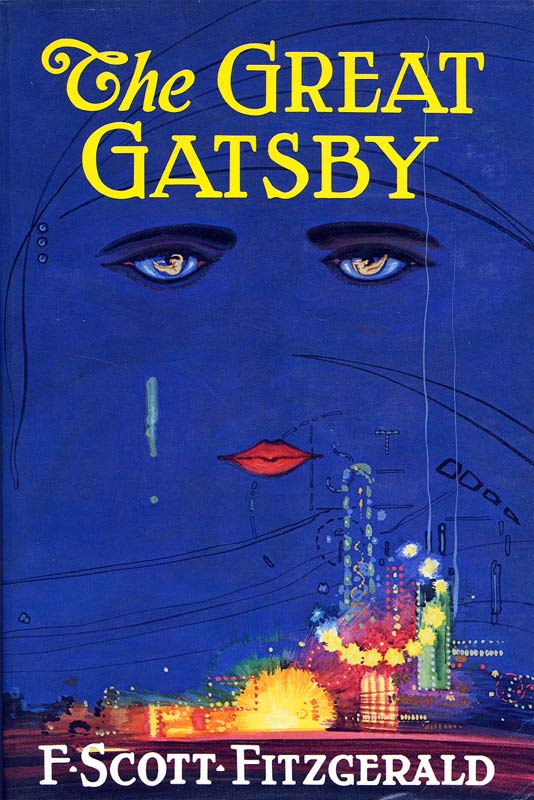
"The Great Gatsby" by F. Scott Fitzgerald

"The Great Gatsby" by F. Scott Fitzgerald

I did something Friday I don’t do very often anymore … I finished a book.

“The Great Gatsby” by F. Scott Fitzgerald.

I had read it before. High school. Tenth grade, maybe. I wasn’t impressed then. I simply couldn’t relate to the early 20s lifestyle with the parties and drinking and the implied sexuality.

This time, however, I was hooked. I couldn’t put it down. In a grand total, over parts of three days, it may have taken me five hours to read. That’s a high estimate, I think.

I don’t know why I chose to pick up this particular book. I do a lot of reading at work. So much so, that sometimes it’s difficult for me to enjoy reading outside of work.

In recent memory, books of fiction I have read over the past 10 years: All seven Harry Potter books. And maybe 10-12 Perry Mason mysteries by Erle Stanley Gardner … they’re short, quick and interesting. And a book called “Name the Baby.” (It’s not a parenting book.)

But that’s it. Lots of magazine articles and newspaper stories and tons more online, but not many books.

But as for this book, it makes me think, how many books do we push as “classics” in high school lit classes that simply go misunderstood by kids? I think maybe I just didn’t have the life experience at 15 or whatever to fully grasp this story.

Though, I say that knowing I was reading William Faulkner and John Steinbeck and Ernest Hemingway at the same time and enjoying them. And those three, particularly Faulkner, are no walk in the park and certainly not always easy to understand.

But it makes me wonder what else I should try and read again, knowing I may find myself reading a totally different book than I first encountered in my high school literature class.